Zenmoney is one of the most well-known personal finance apps for budgeting and expense tracking. It automatically syncs data from bank accounts, builds spending reports, and helps users manage savings goals. But one major question concerns many people: how safe is it to give a third-party app access to your financial accounts?
In this article, we take a closer look at how Zenmoney works, explore real user reviews and security concerns, discuss the potential privacy risks of connecting bank accounts, and compare modern alternatives that offer financial tracking without requiring direct access to your banking data.
What is Zenmoney, and how does the app work for expense tracking?
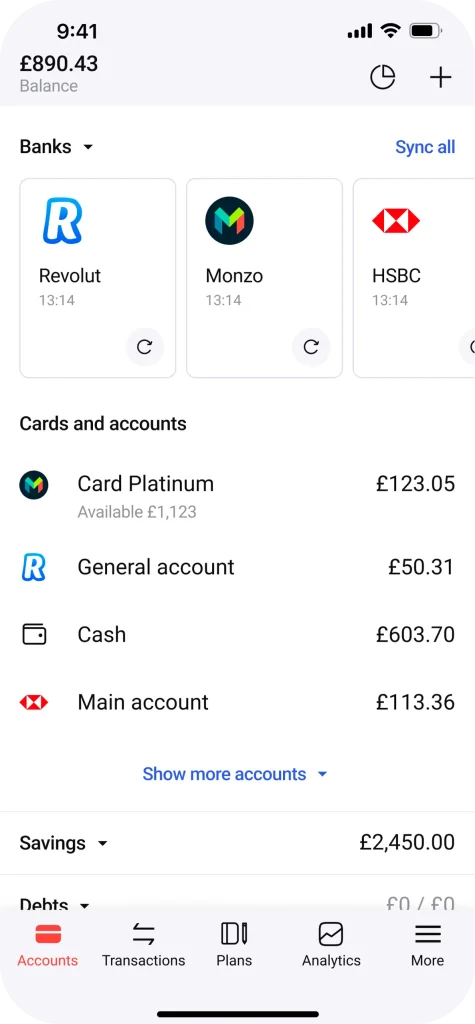
Zenmoney is a cross-platform app designed for personal and family budgeting. Its main advantage is automatic expense tracking: instead of manually recording every purchase, the app imports transactions directly from connected accounts and organizes them automatically.
How Zenmoney works
- Registration. Users simply create an account using an email address and password.
- Connecting accounts. The app allows users to add bank cards, cash accounts, and e-wallets. According to the service, it supports integrations with thousands of banks worldwide.
- Automatic transaction import. Zenmoney automatically imports transactions and sorts them into categories such as groceries, transportation, cafés, subscriptions, and more.
- Analytics and reports. The app generates visual charts and spending reports, helping users track financial trends and compare expenses across different periods.
Zenmoney also allows users to add expenses through bank SMS notifications. However, the app’s main feature is direct bank synchronization through APIs, which enables automatic transaction imports without manual input.
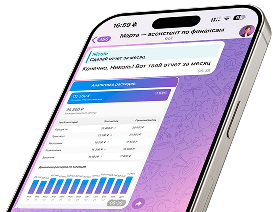
Marta — your personal finance assistant in Telegram
Is Zenmoney safe for expense tracking? Data privacy risks when connecting bank accounts
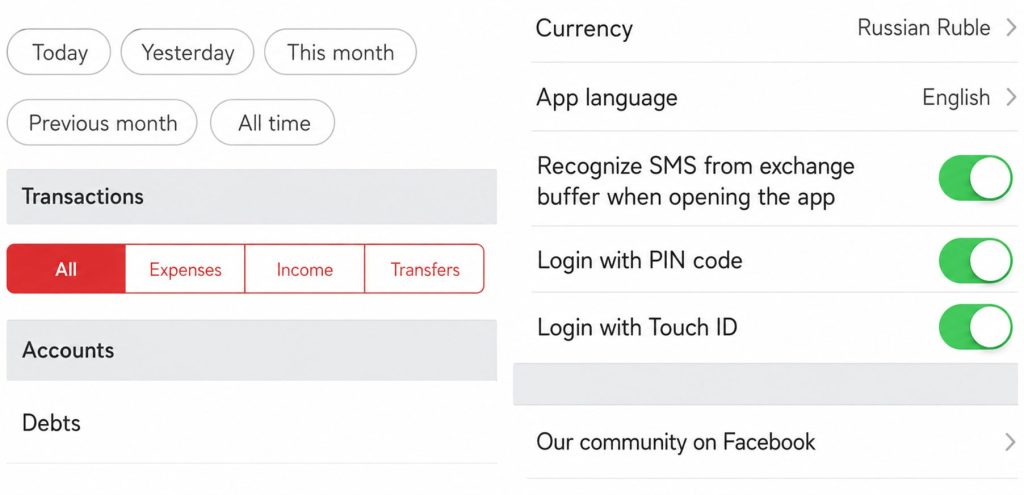
Many users worry that sharing banking credentials with a third-party service could potentially put their money at risk. So let’s take a closer look at how Zenmoney handles security and data protection.
How Zenmoney protects user data
According to the company’s official information, Zenmoney uses 256-bit AES encryption to protect sensitive information. The app also states that banking login credentials are stored only locally on the user’s device in secure storage systems such as Keychain and are not transmitted to the company’s servers. If the app is deleted, this data is automatically removed from the device.
Another important point: Zenmoney states that it cannot transfer or withdraw money from bank accounts. The app is designed only to read transaction history and financial data. In many banking systems, outgoing payments additionally require two-factor authentication through SMS codes or push confirmations, meaning transactions cannot be completed without direct approval from the account owner.
Real risks still exist
Despite the company’s security claims, cybersecurity experts still point to several important concerns:
| Risk | Description |
|---|---|
| Phishing and fake apps | Attackers may create fake clone apps designed to steal banking credentials and personal data. |
| Vulnerabilities in plugins | Zenmoney relies on integrations and open plugins, which may potentially contain security vulnerabilities. |
| Device compromise | If a user’s phone is hacked or infected with malware, attackers could potentially gain access to locally stored banking credentials or authentication data. |
| Bank policy violations | Some banks prohibit sharing login credentials with third-party services, meaning users could technically violate the bank’s terms of service by connecting external budgeting apps. |
“Any transfer of banking data to a third-party app always creates a potential risk zone. Even if a service claims that everything is encrypted, users still lose full control over where and how their financial credentials are handled. The safest approach is to use a financial tool that does not require direct access to your bank accounts in the first place,” says Anton Danilenko, creator of the AI financial assistant Marta.
Zenmoney reviews: what do users like about the app for expense tracking?
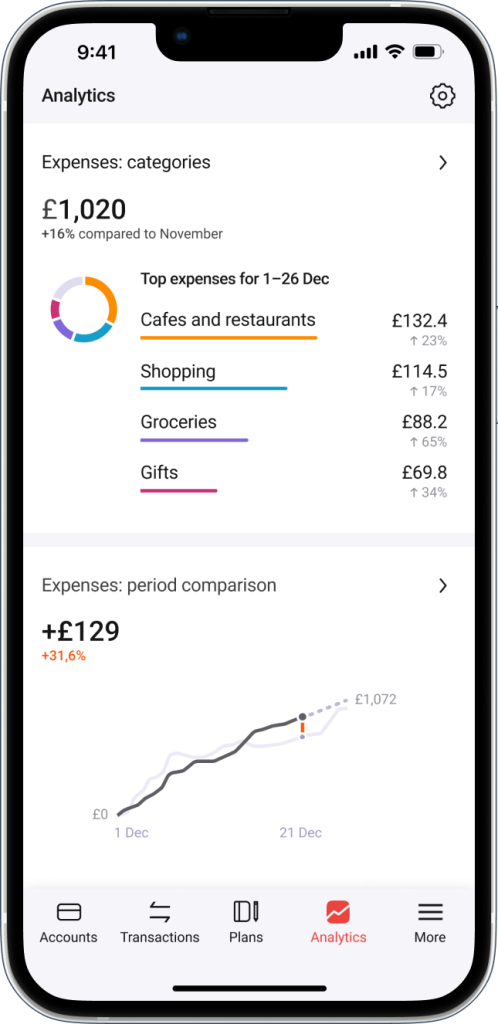
According to online reviews, Zenmoney does have a loyal user base, with many people using the service for years to manage their finances. Here are the features users praise most often:
- Automation. “Zenmoney automatically imports all my transactions from the bank. I do not need to enter anything manually, and it saves a huge amount of time.”
- Reliable budgeting. “I have been using it since 2019 and have always liked it. The interface is convenient, the reports are clear, and it is easy to see where my money goes.”
- Support for multiple banking systems. “It connects different banks and accounts in one place, which makes tracking finances much more convenient.”
- Budget planning tools. “You can set category limits, and the app warns you if you start overspending.”
However, positive reviews mostly come from long-time users who are already familiar with the interface and workflow. Newer users increasingly report issues with setup complexity, synchronization problems, and the overall learning curve of the app.
Zenmoney reviews about security: real concerns, leaks, and privacy risks
This is where things become especially interesting. After reviewing recent Zenmoney feedback from 2024–2026, several concerning patterns and warning signs start to appear.
Synchronization failures and technical issues
A growing number of users report that after recent updates, the app no longer synchronizes properly with banking systems. One review published on RuStore in March 2025 stated: “After the latest updates, the app became practically unusable. Around three months ago, transaction data stopped being recognized correctly.”
Another user wrote in August 2025: “Synchronization periodically stops working, and only the most popular banks seem to get fixed quickly.”
Problems with specific banks
Some banking systems have completely blocked integrations with Zenmoney. According to support responses shared by users, restoring these connections is not always possible, leaving notification-based imports as the only remaining option in certain cases.
Other banks experience synchronization issues because of mandatory two-factor authentication requirements that cannot be bypassed for automatic imports.
Complaints about customer support
Many users also criticize the quality and responsiveness of customer support. One forum comment reads: “The website works poorly. When I contacted support, they basically admitted the site itself was outdated.”
Users additionally point to a large number of unresolved support tickets on community forums, which creates the impression that the service struggles to keep up with technical issues and customer complaints.
Were there any confirmed data leaks?
There are no widely known public reports confirming a direct Zenmoney data breach. However, it is important to understand that the absence of an officially disclosed hack does not automatically guarantee that user data has never been compromised. In the cybersecurity world, incidents are sometimes discovered months later — and some companies are criticized for delayed disclosure practices.
You can also find forum discussions where users mention suspicious account activity after connecting financial apps, although proving a direct connection to Zenmoney is difficult and often impossible without technical evidence.
Our conclusion is simple: even without a confirmed major breach, the situation still raises valid concerns for privacy-focused users. The service regularly faces synchronization problems, customer support receives heavy criticism, and more banking systems continue restricting third-party API access. For many users, the question becomes less about “Has there been a proven hack?” and more about “Is this level of risk worth the convenience?”
Zenmoney alternatives: which apps are safer for expense tracking?

If you are looking for a safer alternative to Zenmoney that does not require direct bank account connections, here are several modern options worth considering.
Comparison table: Zenmoney and alternatives for secure expense tracking
| App | Requires bank connection | Encryption / privacy | Offline mode | AI-powered analytics | Family budgeting | Pricing |
|---|---|---|---|---|---|---|
| Zenmoney | Yes | 256-bit AES encryption | No | Basic | Yes | From ₽149/month |
| Marta | No | Full privacy, no bank access required | Yes | Advanced AI analytics | Coming soon | Free trial available |
| CoinKeeper | Yes | Standard security | No | Basic | Yes | Paid |
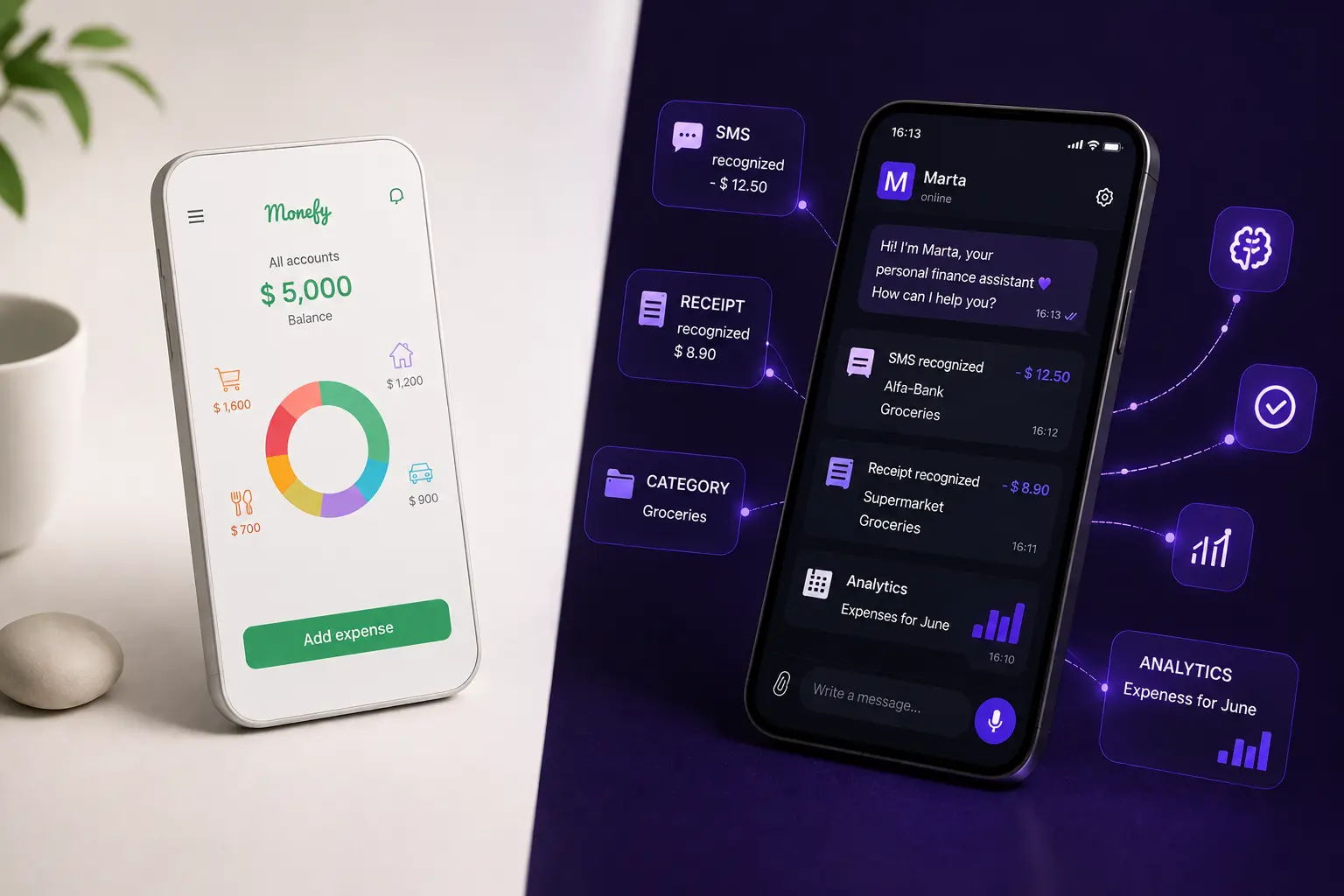
| Monefy | No | Local data storage | Yes | No | No | Freemium |
Why Marta is the best choice for privacy-focused users
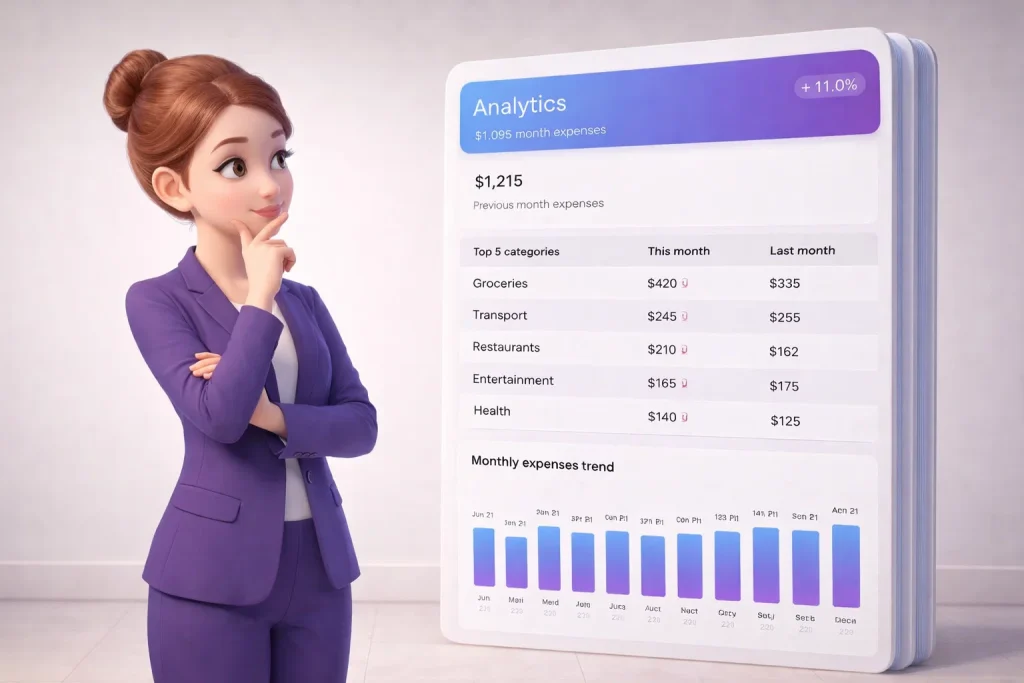
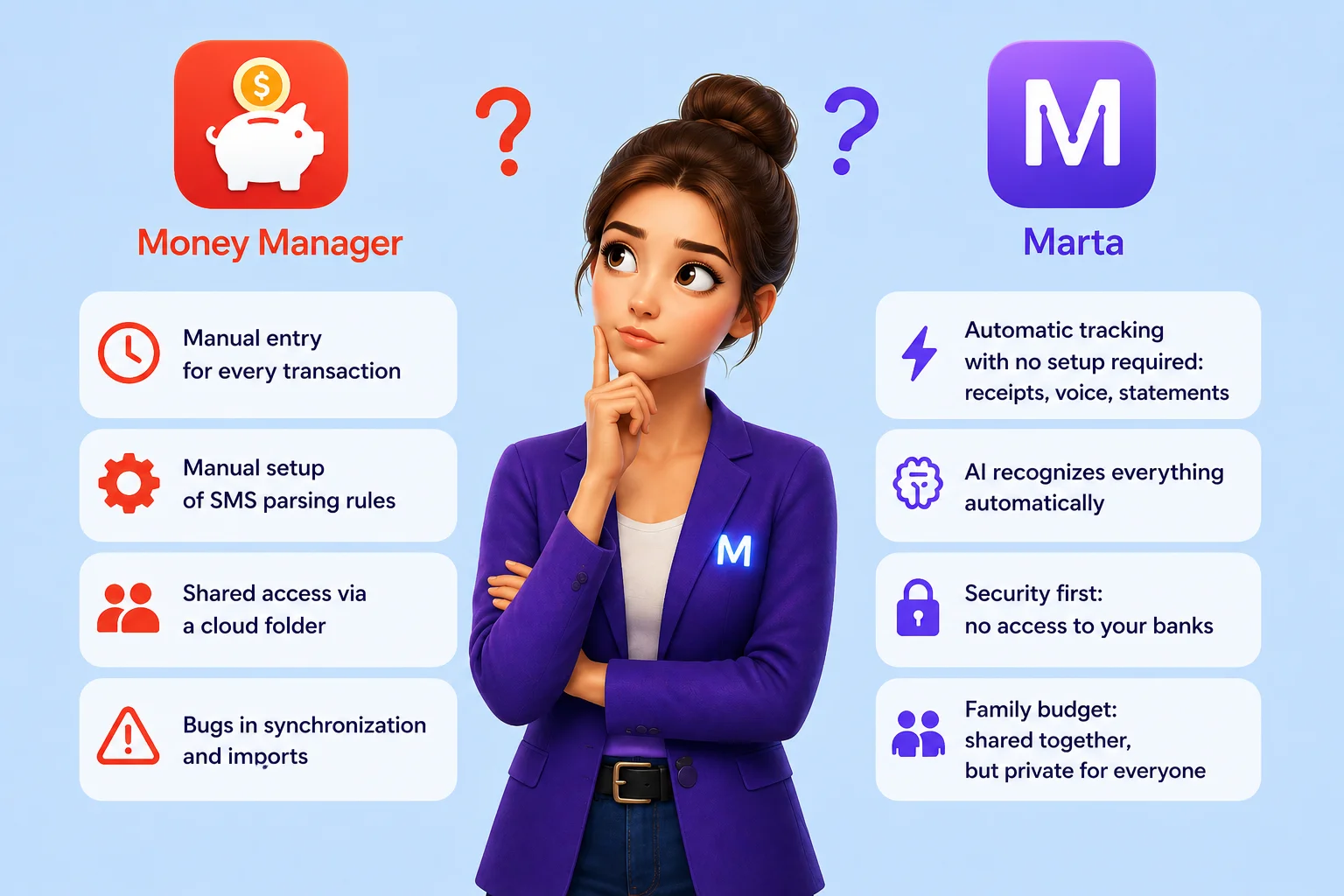
Marta is a modern AI-powered financial assistant built directly into Telegram. The biggest difference compared to Zenmoney is simple: Marta does not require access to your bank accounts.
Instead, you can simply send Marta a bank statement file (PDF, CSV, or even a screenshot), and the AI automatically recognizes transactions, categorizes them, and adds them to your financial reports. Everything you share with Marta stays private and fully under your control.
Learn more about Marta’s features on the main page of our website.
What Marta can do:
- AI-powered financial insights. Marta does not just track expenses — it helps users build financial forecasts, analyze spending habits, and work toward savings goals.
- Convenient Telegram-based experience. Marta works directly inside Telegram, so there is no need to install another app or manage extra accounts.
- Multi-currency support. The assistant supports 170 currencies with automatic exchange rate conversion.
- Clear visual reports. Marta currently focuses on clean bar-chart analytics for easier spending analysis, while additional chart types are planned in future updates.
- Family plan coming soon. Shared budgets, goals, and analytics will allow families to manage finances together more conveniently.
You can follow the latest updates and upcoming features through Marta’s official Telegram channel.

FAQ: common questions about Zenmoney and its alternatives
Is it safe to connect bank accounts to Zenmoney in 2026?
Relatively safe — if you fully trust the service and are comfortable with the potential risks of third-party integrations. Zenmoney uses encryption and cannot directly withdraw money from your accounts. However, users still share sensitive banking credentials or grant financial access to an external service, which may conflict with the security policies of some financial institutions.
What do users say about Zenmoney’s data security?
There are no publicly confirmed large-scale data leaks associated with Zenmoney, but many users complain about synchronization failures, duplicated transactions, broken bank connections, and slow or unresponsive customer support.
Are there safer alternatives to Zenmoney for expense tracking?
Yes. One example is Marta, which does not require direct bank connections. Users decide exactly what financial information to share, while AI automatically recognizes transactions from statements, screenshots, or exported files. This approach avoids the risks associated with sharing banking credentials with third-party services.
How to switch from Zenmoney to a safer budgeting tool:
- Export your financial history from Zenmoney. Download your transaction history in CSV or Excel format.
- Choose a privacy-focused alternative. We recommend Marta, since it does not require direct bank account connections or banking credentials.
- Import your data. Upload your bank statement or exported file to Marta, and the AI will automatically recognize transactions and organize them into categories.
- Customize your budgeting system. Set up categories, spending goals, and financial targets that match your personal budgeting style.
Final verdict: is Zenmoney worth using, and what is the best alternative?
Zenmoney is a powerful but gradually aging budgeting tool. It still offers convenient automation, encryption, and broad bank support across many regions. However, recent user reviews suggest that the overall experience has become less reliable over time, with more complaints about synchronization failures, customer support issues, and banks restricting integrations.
The biggest concern remains the same: users still have to trust a third-party app with sensitive banking access. Even with 256-bit encryption, sharing financial credentials or granting external access to banking data always introduces an additional layer of risk.
So which option should you choose?
- If fully automatic bank synchronization is your top priority, Zenmoney can still be a reasonable choice — but be prepared for occasional synchronization failures and integration issues.
- If privacy and security matter more to you, Marta is the stronger option. It does not require access to your bank accounts, works through AI and Telegram, and will soon introduce a family plan with shared budgets and private personal chats for each family member.
Good financial management is not just about numbers — it is also about peace of mind. Do not expose your savings to unnecessary risks.
Learn more and start budgeting securely today.
- Learn more about Marta’s features on the main page of our website.
- Start your free trial and choose a plan on the pricing page.
- Message Marta directly through the Telegram bot and experience secure AI-powered budgeting for yourself.
- Stay updated on the latest news and product updates through Marta’s official Telegram news channel.